SignUpGenius vs SignUp.com vs Zelos: which volunteer signup tool actually fits your team
A hands-on comparison of the two most popular online signup tools: SignUpGenius and SignUp.com; plus Zelos as a third option for teams that need ongoing coordination instead of one-off events.

Feature comparison
| Feature | SignUpGenius | SignUp.com | Zelos |
|---|---|---|---|
| Free plan | Yes | Yes | Yes |
| Ads | Yes | Yes | No |
| Mobile app | Mobile web | Paid | Yes |
| Chat | No | No | Yes |
| No-account signup | Yes | Yes | No |
| Gamification | No | No | Yes |
| Custom fields | No | Yes | Yes |
| GDPR | No | No | Yes |
| Paid from | $8.99/mo | $99.99/yr | $99/mo |
| Best for | One-off events | Occasional events | Ongoing teams |
If you’re choosing between SignUpGenius and SignUp.com, you’re probably arriving from one of two directions: you’ve been using SignUpGenius and the ads on the free plan have started to grate, or you’re on SignUp.com and wondering whether the more recognized name is a meaningful upgrade. Both are common, and both bring most coordinators to the same fork. Prices checked August 2026 and shown in the currency each vendor publishes.
These two tools overlap heavily. Both let you build a signup, share a link, and have volunteers pick a slot without creating an account. The differences only show up when you look beyond a single signup sheet. So which one wins?
That depends on what you’re actually running. This article puts both side-by-side on the details that matter, then introduces a third option, Zelos: a newer coordination app built around recurring shifts, in-app chat, and mobile delivery, which sits to the side of the signup-sheet category entirely. By the end you’ll know which one fits your situation, including the cases where none of them are quite right.
Quick verdict
- Choose SignUpGenius for one-off events, school activities, fundraisers, and signups where volunteers don’t return week after week. It’s the most recognized tool in the category, and the free plan covers most basic needs as long as you don’t mind the ads.
- Choose SignUp.com if you want the easiest possible setup wizard and your events have several distinct roles per shift. It’s slightly better at granular slot configuration than SignUpGenius.
- Choose Zelos if you’re coordinating an ongoing team with recurring shifts, the same people coming back, and conversations that need to stay organized. Volunteers create an account once — which is what makes the rest possible: task-specific chat, free mobile apps with push notifications, and no ads on any plan, free or paid.
SignUpGenius vs SignUp.com: how they actually differ
Before introducing a third option, here’s the honest head-to-head. Both tools were built for the same job and most of the surface looks identical. The meaningful differences show up in five places.
Scope of the platform. This is where the two diverge most. SignUp.com focuses on the signup itself, with payment collection as the main add-on for paid events. SignUpGenius extends beyond signups into donations, ticketing, auctions, and group payments, all in one dashboard. For a school activities coordinator running a fall fundraiser, a winter volunteer drive, and a spring auction, SignUpGenius keeps everything under one login. For a coordinator who only needs the signup, SignUp.com’s narrower focus means less to learn.
Signup structure. SignUpGenius gives you four distinct scheduling formats: date-based, slot-based, slots-only, and single-date RSVP. Pick the format, build the signup. SignUp.com uses a single wizard that walks you through any signup type, with more granular per-slot configuration (how many people you need, what they’re doing, when). If your event is a simple “pick a time slot” affair, SignUpGenius is faster. If you have mixed roles per shift (three greeters, two setup crew, one photographer), SignUp.com’s slot model handles it more cleanly.
Mobile experience. Neither has a strong mobile story for organizers. SignUpGenius runs on mobile-friendly web for organizers and volunteers; its only app is a Payment Companion App for point-of-sale payments and ticket scanning. SignUp.com’s participant experience is mobile web, which is free; an optional participant app costs $1.99 on the US App Store; signing up on the web is free. In practice, most volunteers on both platforms interact via email or web link.
Pricing structure. SignUpGenius runs on named paid tiers billed in US dollars. Silver US$8.99, Gold US$22.49, Platinum US$44.99 per month billed annually (US$11.99, US$29.99, US$59.99 monthly). You can dip in for one busy season and cancel. SignUp.com starts at US$99.99/year and is annual-only at every tier, with larger multi-account plans for schools and workplaces above that. There’s no monthly option, so even the entry plan is a year’s commitment up front. SignUpGenius is easier to justify for unpredictable usage; SignUp.com makes more sense if you’ve decided you’ll use it consistently.
What happens after the signup. Both tools end at the slot. Once someone has claimed a shift, SignUpGenius and SignUp.com both hand coordination back to you: email reminders go out, and anything beyond a reminder happens in your own inbox, a text thread, or WhatsApp. Neither has in-app conversation. That gap is the reason the third option on this page exists — Zelos attaches a chat channel to each task, so the briefing, the parking question, and the last-minute swap stay with the shift they belong to.
On the question reviewers ask most: the two companies are not affiliated. SignUpGenius was founded in 2006 and is owned by Lumaverse Technologies. SignUp.com (formerly VolunteerSpot) is a separate company. They’re competitors, not siblings.
SignUpGenius review
SignUpGenius is the granddaddy of online signup sheets. It’s been around since 2006 and most people in the nonprofit world have used it at least once. Its strength is volume and simplicity: you can spin up a signup in minutes, share a link, and start collecting commitments without anyone needing to install anything.
Getting started
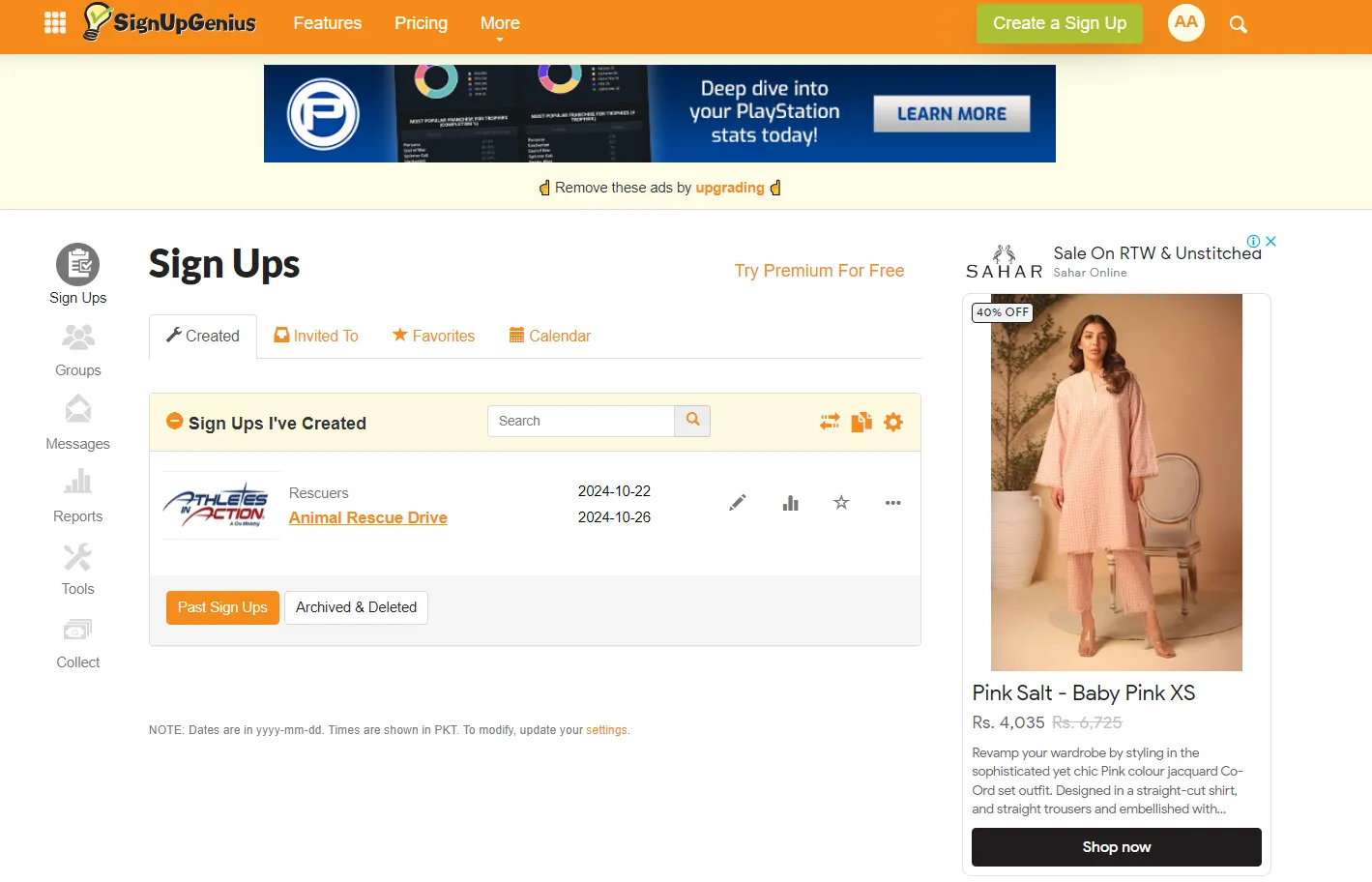
Account creation is fast. You land in a familiar form-builder interface and pick one of the four scheduling formats (date-based, slot-based, slots-only, or single-date RSVP). Fill in the details, pick a theme from the design library, and publish.
The whole setup feels closer to building a Google Form than configuring software. That’s by design, and it’s what keeps SignUpGenius approachable for someone who only runs a signup twice a year.
Inviting volunteers
You share a link. That’s the main mechanism. Email it, post it on social media, embed it on your website. On paid plans you can also build a Group page (a hub with multiple signups under your branding).
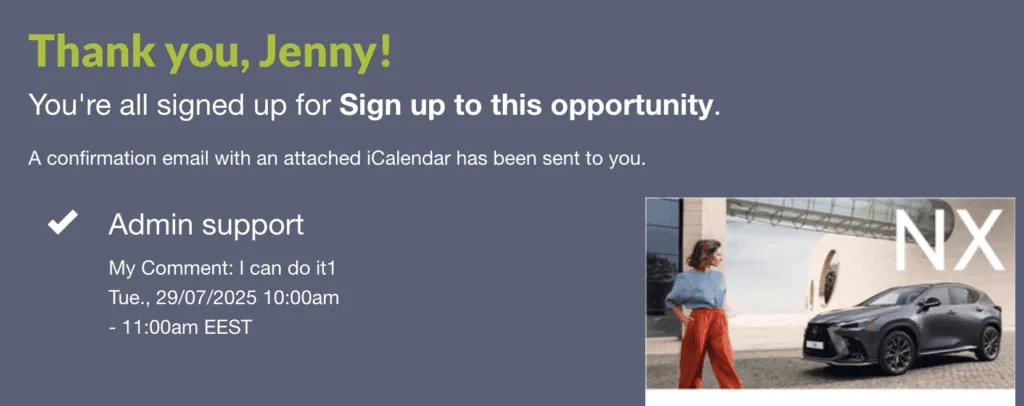
Volunteers click through, pick a slot, fill in their details, and that’s it. No account required to sign up, which removes one of the most common reasons people abandon a registration. They will need an account if they want to edit their commitment later.
Managing signups
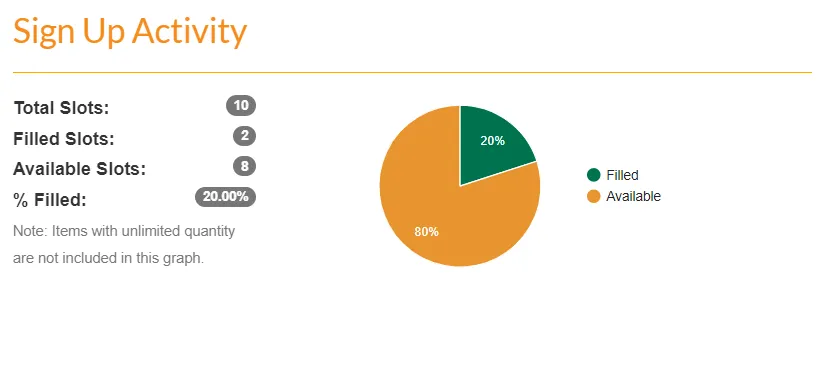
The dashboard shows real-time slot availability. You can send reminder emails, send thank-you notes, and run basic reports on who signed up for what. Premium plans add waitlists, signup locking, custom branding, and recurring signups.
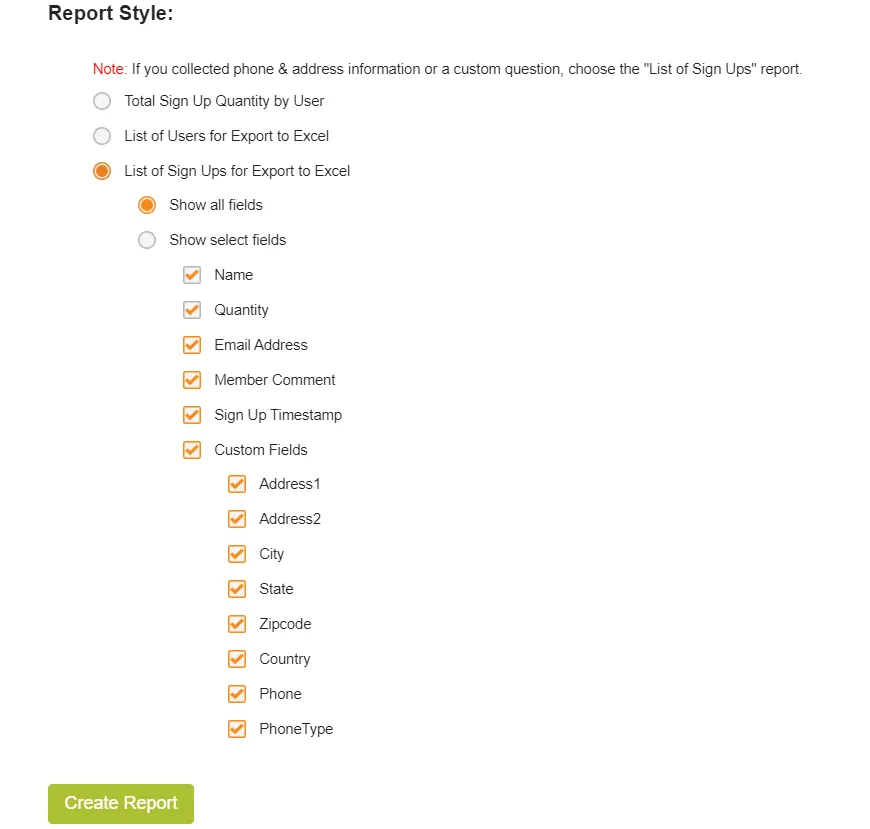
The reporting is set up for basic accounting. It doesn’t include engagement patterns or volunteer history across multiple events. For that, you’d export to a spreadsheet and do the analysis there.
Communication
Email is the only built-in channel on every plan. SMS reminders are on paid plans, and only to numbers registered in the US or Canada. There’s no in-app messaging, since volunteers interact with SignUpGenius through the web.
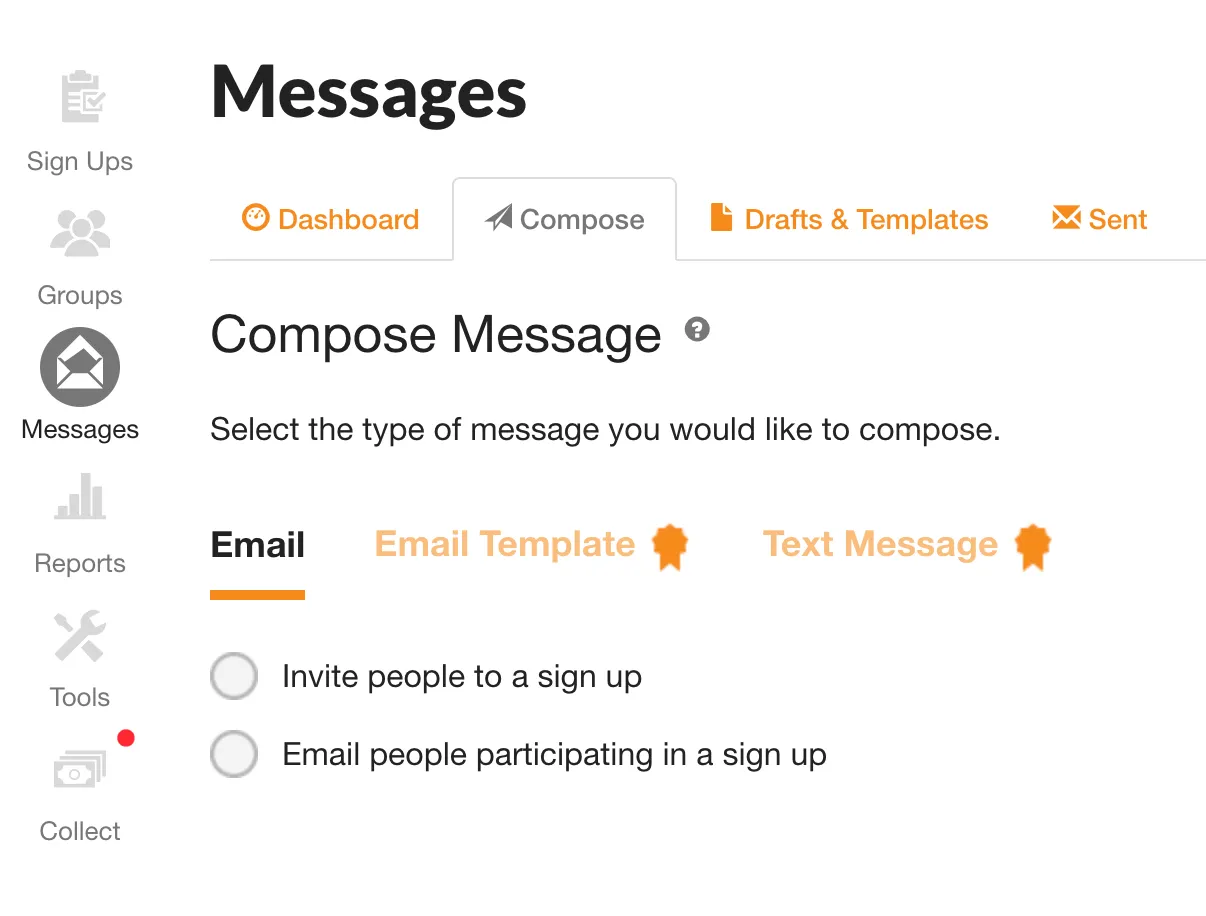
For coordinators who need conversation with their volunteers beyond reminders, that conversation happens in a separate channel: your own email, WhatsApp, or text threads.
What I like about SignUpGenius
- Volunteers don’t need accounts to sign up. They just click the link, pick a slot, and they’re done.
- Themes and templates make signup pages look polished without designer effort.
- Direct payment collection through Stripe for paid events, ticket sales, or donations (5% + $0.50 per transaction on sign ups, including the free plan).
- Massive familiarity. Many of your volunteers have used it before, which lowers the learning curve.
What I don’t like about SignUpGenius
- Ads on the free tier appear on the signup pages your volunteers see. Removing them requires a paid plan.
- Email-only communication means you’ll run a separate channel (text, WhatsApp, your own inbox) for anything beyond reminders.
- No full mobile app. Organizers and volunteers work in the mobile-friendly web; the only app handles payments and ticket scanning.
- Basic reporting. You get signup lists and slot tracking; deeper engagement analysis isn’t included.
SignUpGenius pricing
The Basic plan is free with ads and unlimited signups. Silver $8.99, Gold $22.49, Platinum $44.99 per month billed annually ($11.99, $29.99, $59.99 monthly). Paid plans include ad-free sign ups: 1 on Silver, 10 on Gold, unlimited on Platinum. There’s also an Enterprise tier for larger nonprofits and schools that need embedded signups and dedicated support.
Payments on sign ups cost 5% + $0.50 per transaction through Stripe, including on the free plan.
SignUp.com review
SignUp.com (formerly VolunteerSpot) overlaps heavily with SignUpGenius. It’s another web-based signup tool aimed at schools, faith groups, neighborhood organizations, and small nonprofits. Setup is simple, volunteers don’t need accounts, and you’ll have a working signup live in about ten minutes.
What sets it apart is structure. SignUp.com leans into the wizard experience for first-time organizers and offers slightly more granular per-slot configuration.
Getting started
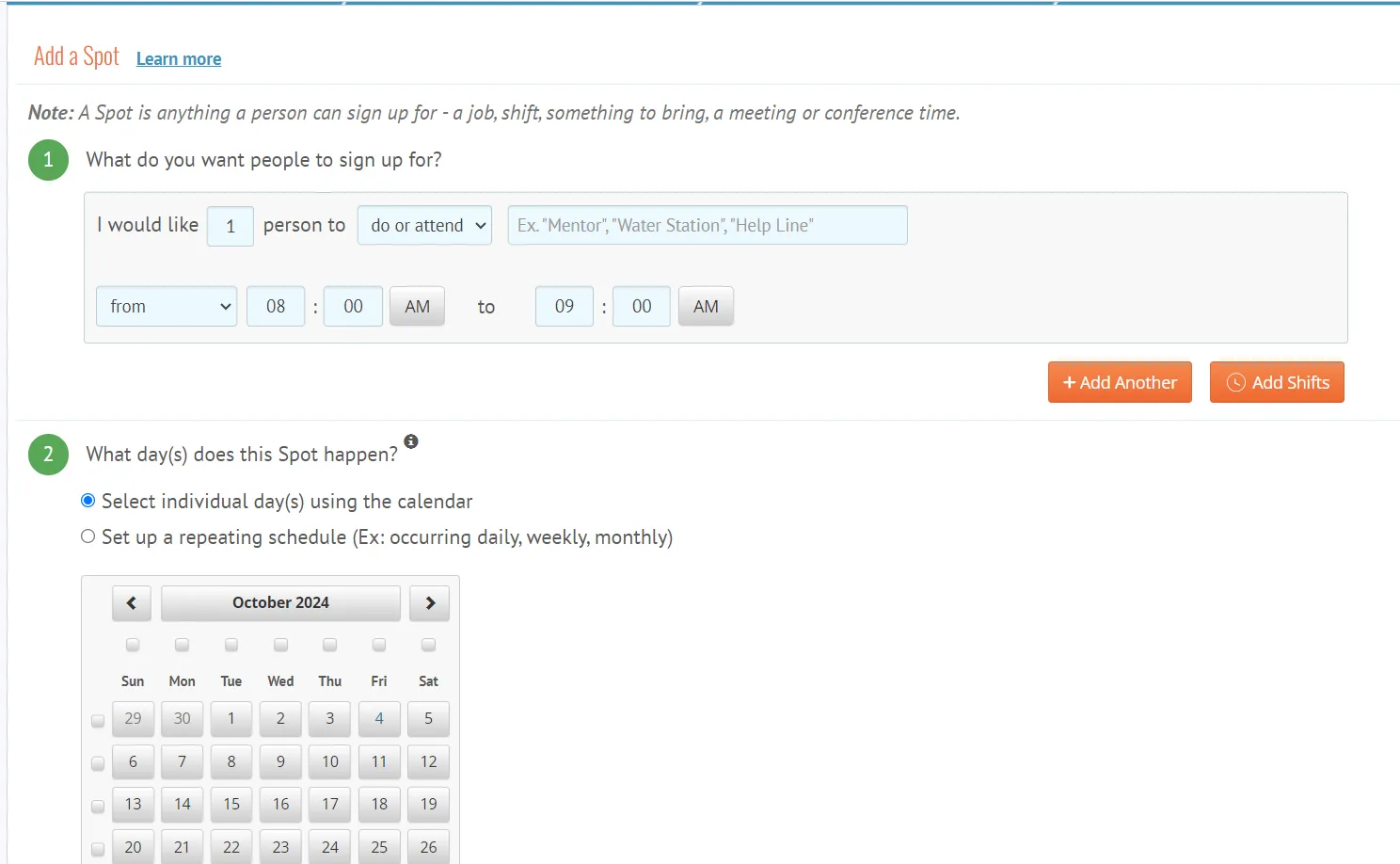
You sign up, hit the dashboard, and click Create New SignUp. The wizard walks you through signup type (single day, multi-day, no specific day, paid event), category (nonprofit, school, conference, etc.), and the basics: name, welcome message, location, dates, organizer details, and what information you want to collect from participants.
Then you build slots. Each slot defines a role or shift: how many people you need, what you need them to do (attend, perform a task, bring something), and when. It’s more granular than SignUpGenius’s slot model, which helps for events with several different roles per shift.
Inviting volunteers
Same as SignUpGenius: share the link. Email, social media, embed on a website, or a custom volunteer portal page on paid plans.
Managing signups
Real-time tracking, automatic reminders, simple editing. You can run reports on signups, planned hours, and participant lists, and export the data. Volunteers can swap shifts with each other on paid plans, which is genuinely useful for teams running recurring shift coverage.
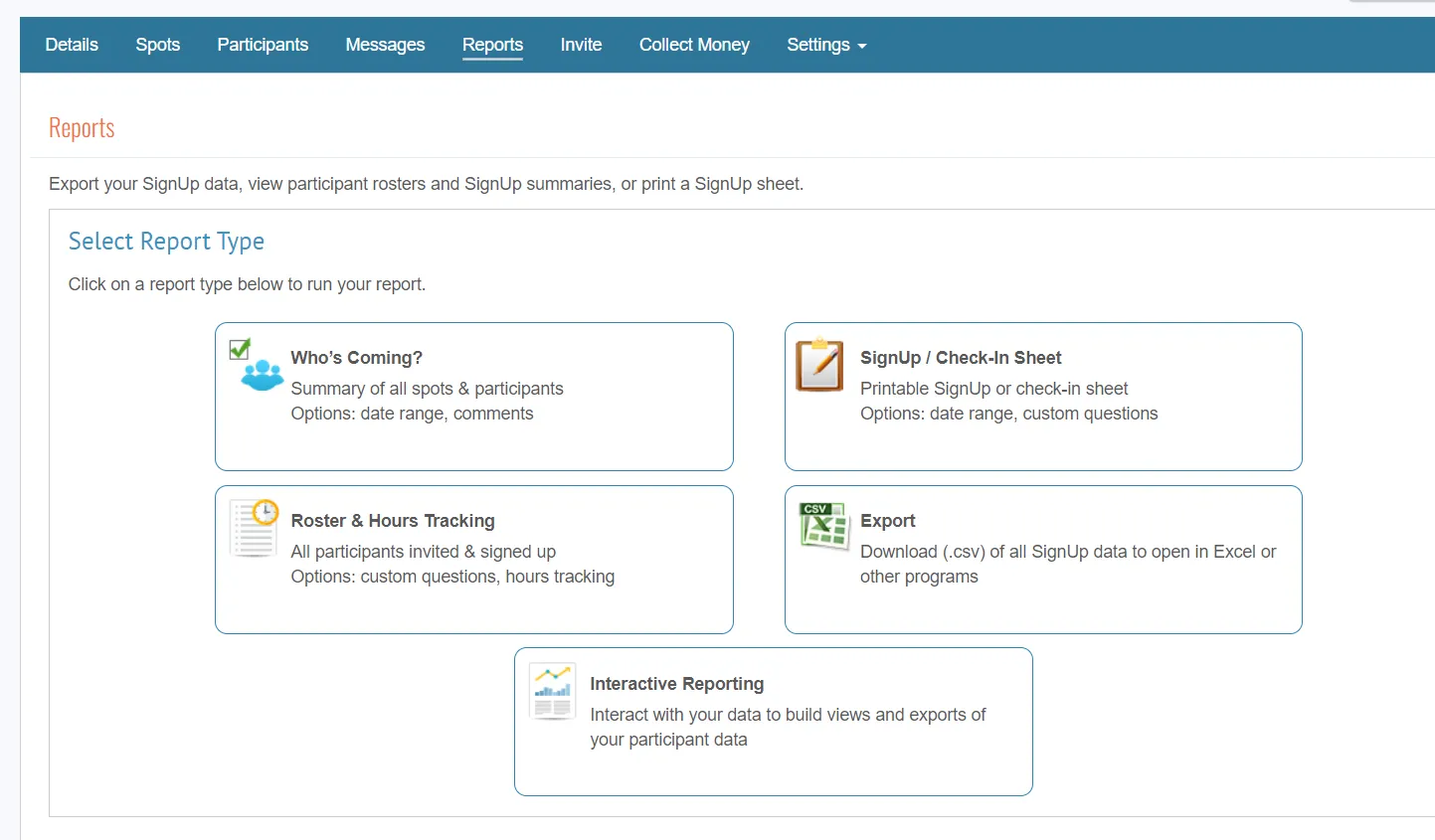
The interface is older in style than some newer tools, but it does the job reliably, and the consistency is part of why long-time users stick with it.
Communication
Email reminders are automatic. Text reminders are available on paid plans (US, Canada, and Australia only). Like SignUpGenius, there’s no in-app chat. Volunteers and organizers communicate outside the platform.
What I like about SignUp.com
- No accounts for volunteers, just like SignUpGenius. They sign up directly from the link.
- Granular slot configuration for events with several distinct roles per shift.
- Shift swapping lets volunteers trade assignments directly without bothering you.
- Mobile-friendly signup pages that work cleanly on phones.
What I don’t like about SignUp.com
- Upgrading doesn’t remove the ads. The free plan shows ads to your volunteers, and so do the paid tiers — going ad-free is a separate paid add-on on top of your subscription.
- The volunteer app costs $1.99 to download. Mobile web is free, but charging volunteers for the app is unusual in this category — most competitors, including Zelos, give volunteers the app for nothing.
- Interface is older in style than some newer tools. Functionality is unaffected, but the look may matter for branding-conscious organizations.
- Annual-only billing at every tier. There’s no monthly plan, so the smallest paid commitment is a full year — awkward if you run two events and then go quiet.
SignUp.com pricing
The Basic plan is free with ads. Paid plans start at US$99.99/year and are billed annually at every tier, with larger multi-account options for schools (Campus) and workplaces (Organization). Higher tiers add group pages, custom participant questions, assistant organizers, waivers, participant check-in, signup locking, and SMS reminders (US/Canada/Australia only). Ad-free is technically an add-on, not included in the base paid plan.
Payment processing for signups that collect money runs about 2.9% + $0.30 per transaction. SignUp.com does not offer money collection to organizers based outside the US or Canada.
See our full SignUp.com vs Zelos comparison.
Zelos review
Zelos is the newest of the three, and it was built for a different problem. SignUpGenius and SignUp.com are signup sheets: one event, one form, one link. Zelos is a signup board: an ongoing list of tasks and shifts your team picks from, with chat built in for every one.
If your volunteers come back week after week, this changes the experience. Instead of building a new signup every time, you post the next shift to a workspace your team is already in. They get a push notification. They claim what they want.
Getting started
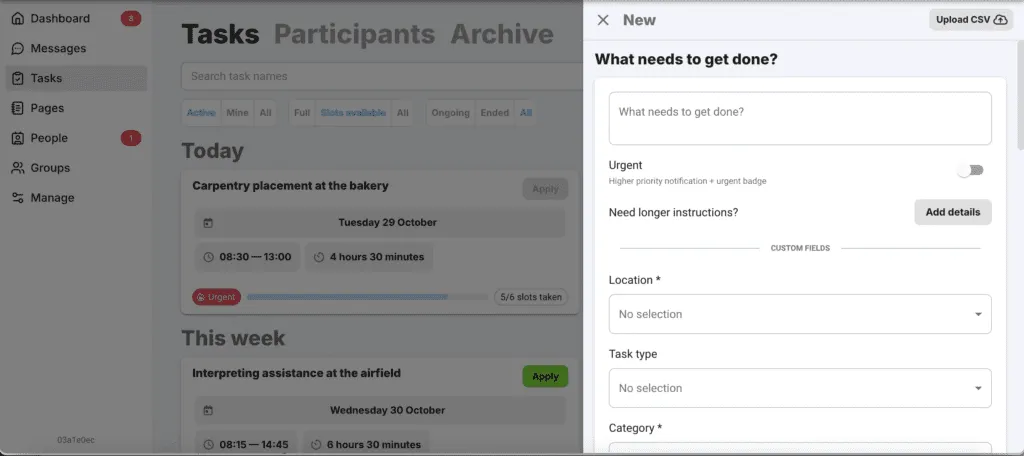
You create a workspace, post your first few tasks, and invite people via a join link or QR code. Volunteers download the app (iOS or Android) or open the browser app, choose a password, and they’re in.
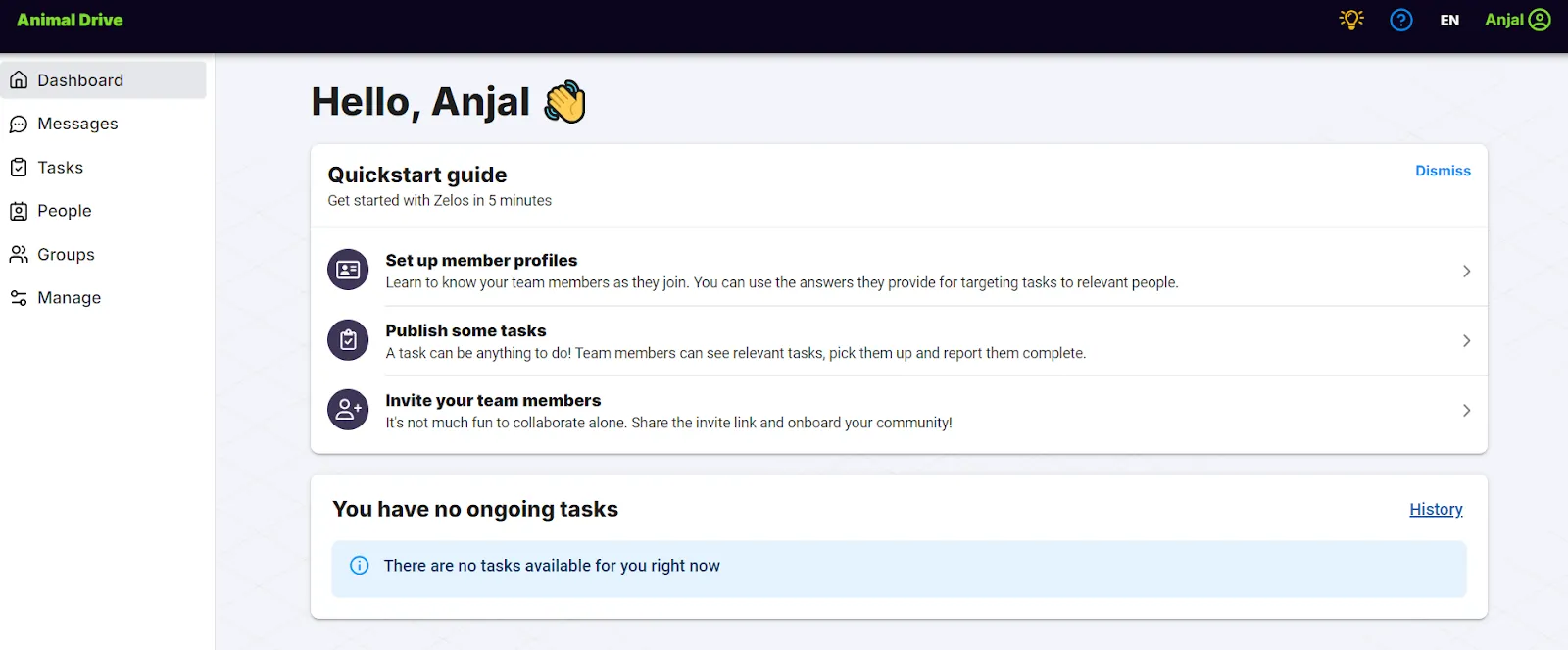
Every task uses the same format: title, description, time, location, capacity, and any custom profile fields you’ve defined for things like skills, location, certifications, or availability. You can add photos and attachments, set deadlines, and choose between open self-signup or an approval queue where you pick from applicants.
Inviting volunteers
A join link or QR code is the main mechanism. Volunteers create a Zelos account (this is the trade-off, since Zelos isn’t anonymous like SignUpGenius) and join your workspace. Teams are private: people join through an invite or a public join link, and nobody sees tasks, members or chat until they’re in. Admins can approve each new member.
Smart targeting lets you publish a task only to people who match certain criteria, like weekend availability or first aid certified. Tasks that don’t match a volunteer’s profile don’t show up in their list, so there’s less noise to scroll past.
Managing signups
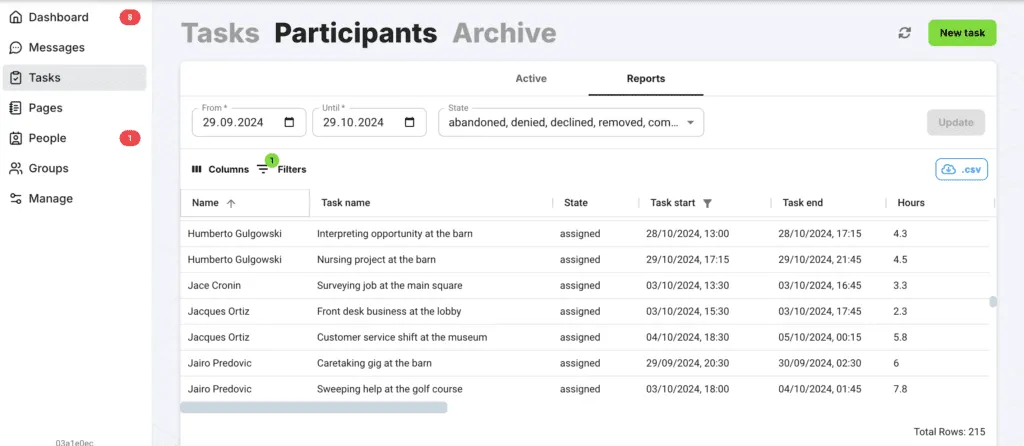
The dashboard shows real-time signup status. You can export tasks and member data to CSV on every plan, including the free one, and reports cover who signed up, who showed up, and planned vs actual hours.
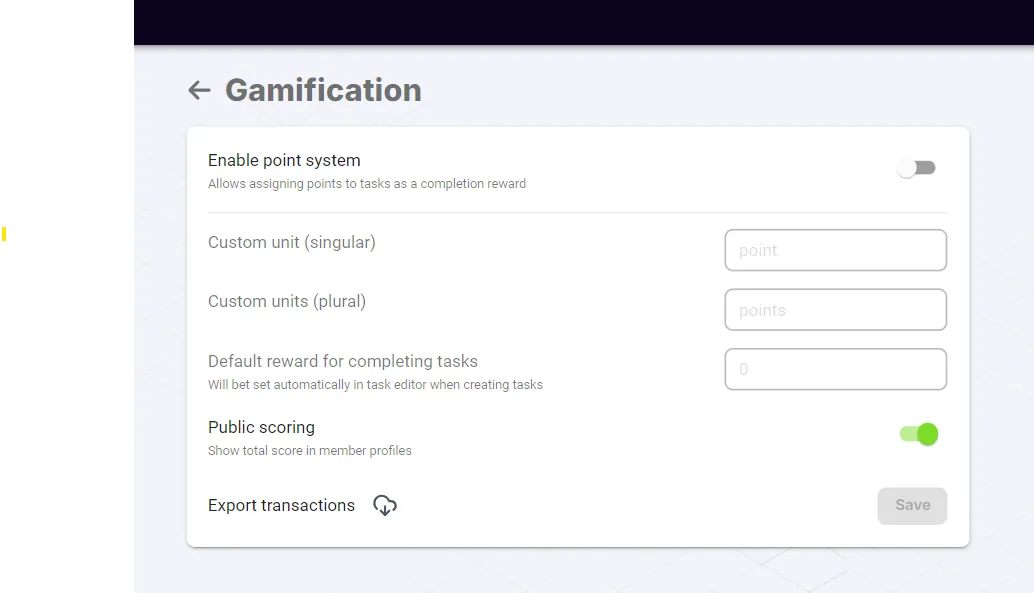
Points and leaderboards are also built in on every plan. Volunteers earn points for completing tasks, and you can run multiple parallel competitions (monthly, by region, by project). It sounds gimmicky until you see it work. Coordinators consistently report it lifts engagement, particularly with younger volunteers.
Communication
This is where Zelos diverges most sharply from the other two. Every task has its own chat channel: the people signed up for that shift, plus admins, in one focused thread. No mixing the Tuesday food bank conversation with the Saturday cleanup conversation. Push notifications mean volunteers see updates instead of buried emails.
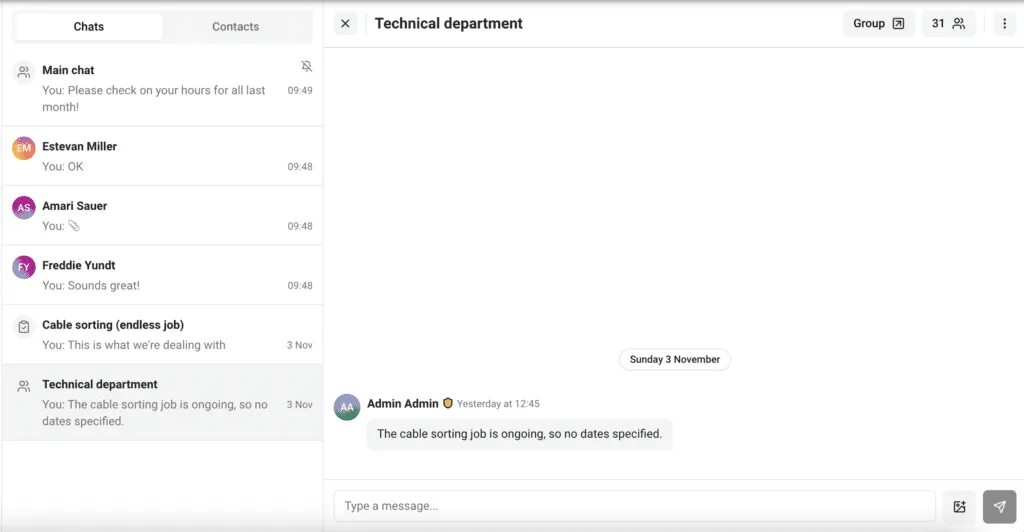
There are also broadcast announcements for organization-wide news and direct messages between admins and members. Member-to-member private messaging isn’t supported. All conversations include admin oversight by design.
What I like about Zelos
- Task-specific chat keeps conversations relevant and stops the noise that kills bigger group chats.
- Real mobile apps on iOS and Android, free for volunteers, with push notifications.
- No ads on any plan, including the free one.
- GDPR-compliant by default, with no contact-info sharing between members. Built in Estonia, EU.
What I don’t like about Zelos
- Volunteers need accounts to use it. For very occasional volunteers, that’s friction the other two don’t have.
- Not a CRM. There’s no donor management or fundraising side. You’ll need separate tools for that.
- Not a recruitment tool. Zelos coordinates volunteers you already have. It doesn’t help you find new ones.
- 25 concurrent active tasks on the free plan can feel tight for very busy operations, though the limit applies to concurrent active tasks, not lifetime.
Zelos pricing
The Free plan includes unlimited volunteer accounts, 25 concurrent active tasks, gamification, in-app messaging, and CSV exports, with no expiration and no credit card required. Pro is $99/month billed annually (or $119/month monthly) and adds unlimited tasks, CSV bulk upload, custom team URLs, and full chat history. Enterprise from $999/month, billed annually (launch fees depend on scope), for white-label apps and API access.
Pricing is never charged per volunteer or per seat on any plan. Nonprofit and education discounts are available on Pro and Enterprise.
Pricing comparison
All three platforms have a free plan, but what you actually get differs a lot.
SignUpGenius gives you unlimited signups and email reminders at no cost. The trade-off is ads on every signup page your volunteers see. Paid plans include ad-free sign ups: 1 on Silver, 10 on Gold, unlimited on Platinum. Silver $8.99, Gold $22.49, Platinum $44.99 per month billed annually ($11.99, $29.99, $59.99 monthly). The monthly billing option makes it easy to pay only during busy seasons.
SignUp.com also offers a free tier with unlimited signups. Paid plans start at US$99.99/year, billed annually — there’s no monthly option, so you can’t dip in for one busy season the way you can with SignUpGenius. Higher tiers add organizer capacity (assistant organizers, waivers, check-in). Upgrading still does not remove ads; ad-free is a separate add-on.
Zelos’s free plan includes no ads, in-app chat, push notifications, gamification, and unlimited volunteer accounts. Pro is $99/month billed annually, the steepest entry point of the three. It’s a flat fee with unlimited members, never charged per person or per seat.
For occasional events, SignUpGenius is the most flexible on cost (monthly billing, low entry price). SignUp.com makes sense once you’ve committed to year-round use. Zelos earns the higher price tag when your team needs ongoing coordination beyond per-event signups.
Pricing was last verified in August 2026. Check each platform’s website for current rates.
Which one should you choose?
Think about what your volunteers actually do, not what features sound impressive.
If volunteers show up once for a single event, pick a time slot, and leave, then SignUpGenius or SignUp.com will serve you well. SignUpGenius has the larger user base, more familiar interface, and named paid tiers. SignUp.com has slightly better slot granularity, shift-swapping, and a volunteer app. Either works for school events, occasional fundraisers, conference volunteer signups, or anything one-off.
If your team comes back regularly (weekly food bank shifts, ongoing campaign work, monthly cleanups, recurring care visits), Zelos is built for that pattern. Task-specific chat, push notifications, gamification, and a free plan that doesn’t show ads to your volunteers. The account requirement is real friction for one-off use, but it pays off when the same people are coming back.
If none of these three quite fits, the signup tool category is broader than this comparison suggests. Jotform is a general form builder with signup, payment, and event registration features, and no ads on the free plan. VolunteerLocal is purpose-built for recurring shift coverage with a strong shift builder used by races and large events. Volgistics offers deeper hours tracking and demographic reporting for nonprofits that need analytical depth. Each is worth a look if your situation doesn’t fit cleanly into the three patterns above. For a wider view, see our comparison of volunteer signup apps.
The honest test: are you running an event or running a team? Events want signup sheets. Teams want a coordination app. The answer usually picks the tool for you.
Frequently asked questions
What’s the main difference between SignUpGenius and SignUp.com?
SignUpGenius offers four distinct scheduling formats and named paid tiers billed in US dollars. SignUp.com uses a single signup wizard with more granular per-slot configuration and annual-only pricing from US$99.99/year. For simple time-slot signups, SignUpGenius is faster to set up. For events with mixed roles per shift, SignUp.com handles complexity slightly better.
How much does SignUpGenius cost compared to SignUp.com?
SignUpGenius paid plans start at $8.99/month billed annually, or $11.99 billed monthly. SignUp.com paid plans start at $99.99/year and are billed annually only.
SignUpGenius has three paid tiers: Silver $8.99, Gold $22.49 and Platinum $44.99 per month billed annually ($11.99, $29.99 and $59.99 monthly). Paid plans don’t remove every ad: Silver includes 1 ad-free sign up, Gold 10, and Platinum unlimited.
SignUp.com’s plans are Starter ($99.99/year), Plus ($249.99/year) and Max ($499.99/year). Ads stay on paid plans unless you buy the ad-free add-on.
Both free plans show ads. Over a full year, the entry plans cost about the same ($107.89 for SignUpGenius Silver, $99.99 for SignUp.com Starter). The real difference is flexibility: SignUpGenius lets you pay monthly for a busy season and cancel, while SignUp.com needs a year up front.
Are SignUpGenius and SignUp.com the same company?
No. SignUpGenius was founded in 2006 and is owned by Lumaverse Technologies. SignUp.com (formerly VolunteerSpot) is a separate company. They’re independent competitors despite the similar names and overlapping features.
Is SignUp.com really free?
The Basic plan is free, but it shows ads on the signup pages your volunteers see. Mobile web is free; an optional participant app costs $1.99 on the US App Store; signing up on the web is free. Paid plans start at US$99.99/year. Paying doesn’t remove the ads — ad-free activation is a separate add-on on every tier.
Do volunteers need to create accounts on SignUpGenius?
No, not to sign up for a slot. Volunteers can click a link, pick a time, and complete the signup without an account. They only need an account if they want to edit their commitment later or manage multiple signups in one dashboard.
Which is better for nonprofits: SignUpGenius or SignUp.com?
For occasional events and one-off signups, both work well. SignUpGenius tends to win on familiarity and flexible paid tiers, since most US nonprofit volunteers have used it before. SignUp.com tends to win for organizations that have decided to use one tool consistently year-round and want more roles per shift. Neither is a strong fit for nonprofits coordinating ongoing volunteer teams; for that, a coordination app like Zelos or a dedicated CRM is a better match.
Does SignUpGenius work for ongoing volunteer teams?
It can, but it wasn’t built for it. SignUpGenius is designed around discrete events: one signup, one event. For a team that meets weekly or runs recurring shifts, you’ll end up creating new signups constantly and running communication through a separate email or messaging tool. Apps built for ongoing coordination (like Zelos) handle this pattern more naturally.
What’s a free volunteer signup tool without ads?
Zelos has a free plan with no ads, unlimited volunteer accounts, in-app messaging, and gamification, with a limit of 25 concurrent active tasks. SignUpGenius and SignUp.com both show ads on the free tier. SignUp.com also shows ads on paid plans unless you buy the ad-free add-on.
Can I send text messages to volunteers from SignUpGenius or SignUp.com?
SignUp.com SMS covers US, Canada, and Australia. SignUpGenius SMS supports numbers registered in the US or Canada only. Both platforms have email reminders included on the free tier. For in-app messaging with push notifications, you’d need a coordination app like Zelos.

Ready to simplify your team coordination?
Try Zelos free